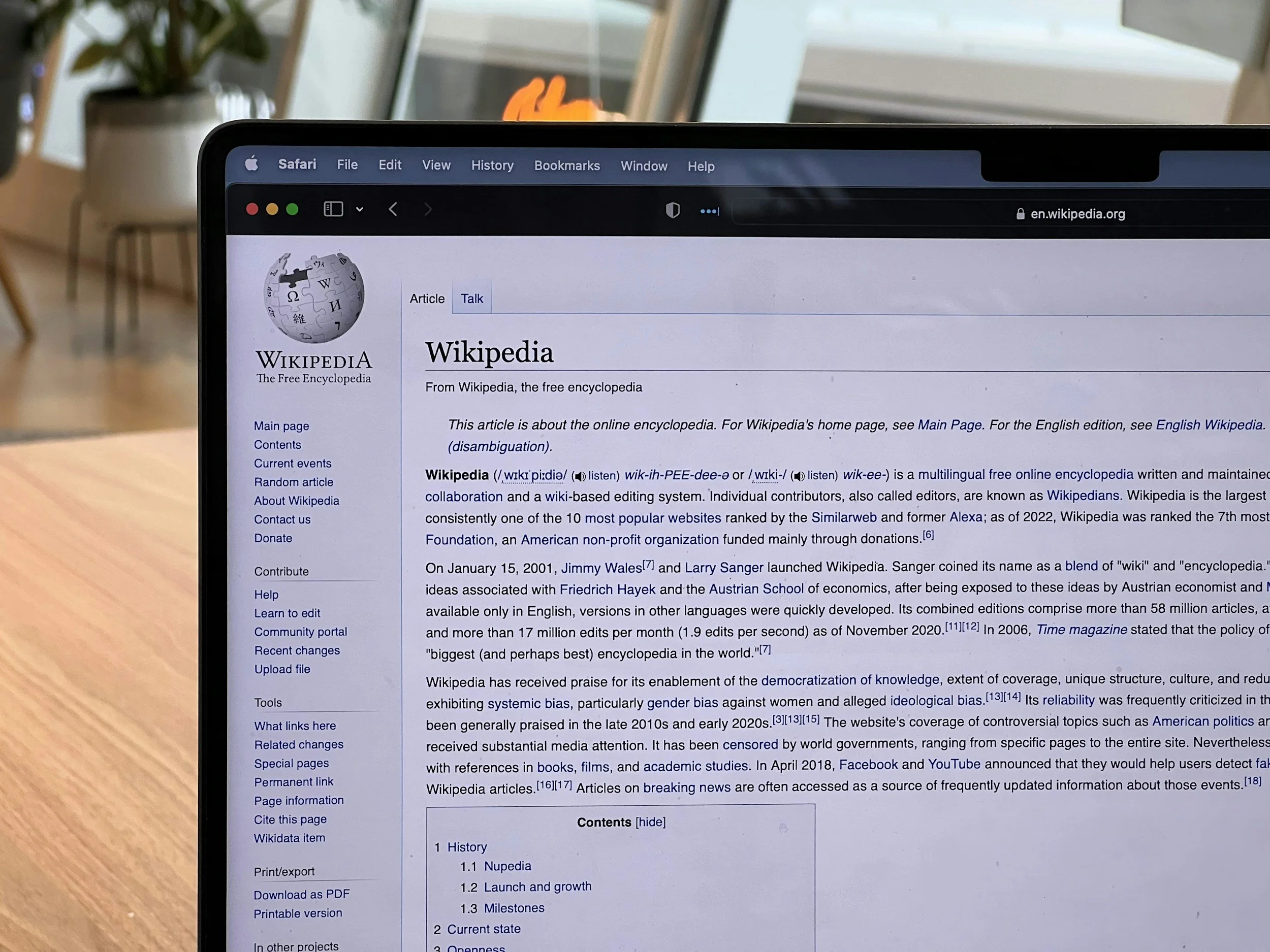
Wikipedia for Beginners, Pt. 1: Notability Guidelines
Wikipedia and Public Relations for Visual Artists: Understanding Notability Guidelines
Wikipedia pages are valuable sources of information for the general public, curators, collectors, journalists, and institutions looking to learn more about an artist. As part of a broader artist and brand management strategy, it is worth carefully considering how and whether you should approach the platform.
Whether you already have a Wikipedia article or are thinking about pursuing one, understanding how Wikipedia evaluates artists is essential. In this post, I will explain the Notability Guidelines that Wikipedia editors use to determine a person’s eligibility for a page.
In subsequent posts, I will cover Wikipedia’s Biographies of Living Persons (BLP) Guidelines and its Conflict of Interest (COI) Editing Policy. Together, these posts provide foundational knowledge for approaching Wikipedia through the lens of public relations for visual artists, rather than marketing or self-promotion.
Notability: The Eligibility Test for Wikipedia Pages
If you do not yet have a Wikipedia page but would like to pursue one, the first step is to understand whether you meet Wikipedia’s notability requirements. Notability is not about talent, success, or career length; it is about documented public recognition.
The full guidelines are available on Wikipedia, but the essential criteria are summarized below.
Basic Notability Criteria
The most basic test of notability is whether a subject has received:
“Significant coverage in multiple published secondary sources that are reliable, intellectually independent of each other, and independent of the subject.”
In practical terms, this means you must be able to point to unbiased, third-party writing about you and your work. For visual artists, acceptable sources often include:
Critical reviews in reputable publications
Magazine or newspaper profiles
Curatorial texts from solo or group exhibitions
Exhibition catalog essays written by independent curators or scholars
Didactic texts from artwork pages on the websites of major public museums or collections
Sources that cannot be used include:
Press releases from your commercial gallery
Text from your personal website or social media
Artist statements written by you
Marketing materials produced by art consultants or agencies working on your behalf
These are considered promotional sources that are not sufficiently independent and do not satisfy Wikipedia’s standards. From an artist brand management perspective, it is important to understand that Wikipedia values documentation, not messaging.
Additional Notability Criteria
If the basic criteria are not clearly met, editors might consider additional indicators of notability, including whether:
The artist is regarded as an important figure or is widely cited by peers or successors; or
The artist is known for originating a significant new concept, theory, or technique; or
The artist has created or co-created a significant or widely recognized body of work that has been the primary subject of multiple independent reviews or articles; or
The artist’s work has:
become a significant monument,
been a substantial part of a notable exhibition,
received significant critical attention, or
been acquired by the permanent collections of multiple notable museums or institutions.
These criteria reinforce an important point in PR for artists. Wikipedia recognition demonstrates ongoing public discourse rather than a single achievement or press hit.
Next Steps: A Policy-Safe Approach to Wikipedia
Once you have gathered sufficient independent coverage to demonstrate notability, the next step is to determine how to proceed. This is where artist communication and ethical public relations for artists become especially important.
Create a Wikipedia account and disclose your connection
If you choose to pursue this, create an account and clearly disclose that you are the artist. Transparency is non-negotiable under Wikipedia’s Conflict of Interest policy. (Note: I will share more about policy in a later post.)
Engage respectfully with Wikipedia editors
Rather than contacting individual editors directly, work within the appropriate, existing channels such as:
Articles for Creation
Article Talk pages
Conflict of Interest noticeboards
These are spaces for collaboration that maintains Wikipedia’s editorial independence, and this approach protects both the artist and the integrity of the platform.
The limits of self-drafting
Wikipedia strongly discourages people from writing articles about themselves. In some cases, you can prepare a neutral, well-sourced draft for review, provided that:
you fully disclose your conflict of interest
your tone is strictly encyclopedic and non-promotional
you respect the editors’ full authority and autonomy over any final draft
From the standpoint of pr for visual artists, drafting is not a shortcut—it is often the most scrutinized part of the process and should be approached conservatively.
Focus on long-term visibility, not speed
At its core, this process reflects what effective artist & brand management and public relations for visual artists already require: building meaningful relationships with the public through credible institutions, critics, curators, and publications.
Next steps
In the next post, I will explain Wikipedia’s Biographies of Living Persons guidelines and how they intersect with artist brand management, PR for artists, and the work of an experienced artist communications agency.